





News
Safer Roads, Stronger Returns: How to make mobility finance work for people and portfolios
23.01.2026
By Thierry Déau, Founder & CEO, Meridiam , and Louis Downing, CEO, GIB Foundation
- Key findings from the new report (Financing Infrastructure for Safe and Sustainable Mobility, GIB Foundation & FIA Foundation, Jan 2026):
The stakes & the gap: LMICs need US$400–800bn in additional road safety investment this decade, while MDBs committed ~US$3.6bn (2018–2022) specifically to safety within transport lending; underscoring the scale of the shortfall. WHO 2023; MDB Road Safety Working Group
- Scaling what works: Achieving the UN target of ≥75% of travel on 3star or better roads could require ~US$660bn in LMICs and deliver ~US$12 in benefits for every US$1 invested. iRAP Safety Insights Explorer
- Modelled returns (indicative): Scenario analysis suggests that targeted safety packages can deliver mid20s IRRs in central cases; e.g., a BRT first/lastmile safety bundle assuming a modest ~+4% ridership uplift, and a tollroad programme that reduces incidentrelated closures and claims. Actual results depend on corridor demand, capex/O&M, and contract incentives; see the report for assumptions and sensitivities.
- On the ground evidence: Tianjin’s station area upgrades helped lift metro ridership up to +85% in the centre; in Victoria (Australia), the “Top 20” safer roads programme cut fatalities by 77% and hospital bed days by 74%. ITDP/STA case; iRAP/AusRAP case
Why this matters now
Road crashes kill ~1.19 million people each year, making them the leading cause of death for ages 5–29 and a persistent drag on productivity, health systems and trust in public services. Despite modest global progress, we are not on track to halve deaths and serious injuries by 2030 without a decisive shift in how we design, finance and operate transport systems. However that shift is slowly happening, safety is moving from a “niceto have” to a core performance variable that protects cash flows, where lowers risk premia and strengthens the social licence of infrastructure. WHO Global Status Report 2023; UN Decade of Action 2021–2030
From social objective to performance variable
This report shows how targeted upgrades-median protection, safer speeds, high friction surfacing, better lighting and delineation, managed shoulders and refuges, smart work zones and faster incident response, reduce closures and claims, protect tollable hours/availability payments, and (in mass transit) lift ridership. MDBs already finance large volumes of transport; embedding safety as a funded, measured obligation within those flows is the fastest way to close the gap. MDB Working Group financing analysis
Design that unlocks demand (and resilience)
Safe first/last mile access is a cash engine for mass transit. In Tianjin, coordinated improvements, protected crossings and sidewalks, cycle lanes, lighting, and bus–metro–bike integration around 96 stations, helped raise metro patronage up to 85% in the city centre; daily trips ultimately nearly doubled the revised target. That kind of demand response turns modest safety outlays into durable fare revenue and system resilience. iRAP on Tianjin’s 2024 STA; ITDP/STA Spotlight
Capital follows contracts: pay for verified outcomes
When contracts hardwire safety, prevention becomes bankable. Panama’s East PanAmerican Highway PPP requires roads to achieve iRAP 3starorbetter at the start of O&M, aligning payments to measured risk reduction instead of inputs. Variants of this approach, bonuses for exceeding targets, deductions for lapses, independent audits and transparent MRV, turn safety into cash relevant KPIs. iRAP on Panama PPP
Finance that rewards safer operations
The instruments exist and are scaling:
- Sustainability or safetylinked loans/bonds with margins tied to safety KPIs;
- Outcome bonds that repay based on verified casualty reductions;
- Revenue/securitised notes serviced from roadagency receipts; and
- Blendedfinance structures (guarantees, firstloss, TA) to derisk impactful projects.
The FASTInfra Label provides a common language and independent verification of safety, climate and social performance, reducing diligence costs and helping crowd in private capital. FASTInfra Label
Insurers and data: the untapped accelerators
Insurance can transmit safety improvements into a lower premium Victoria’s Top 20 programme (flexible barriers, wide centre lines, rumble strips, roundabouts) slashed fatalities by 77% and hospital bed days by 74% across ~1,800 km of high-risk corridors; evidence that prevention protects both people and balance sheets. New data tools (e.g., telematics and networkwide risk mapping) make pricing prevention increasingly feasible. iRAP/AusRAP case
A practical agenda for 2026
Governments and road agencies: mandate iRAPaligned safety KPIs and MRV in PPPs and public works; publish open crash and StarRating data; and prioritise bankable pipelines (BRT access, safe corridors) that blend safety, climate and equity. WHO Decade of Action
Investors and operators: integrate safety into screening and disclosure; include binding safety covenants in shareholder, finance and EPC/O&M contracts; and adopt safetylinked finance where margins step down as verified KPIs are met. (See report models and clauses.)
MDBs/DFIs and philanthropies: expand blended/resultsbased instruments, fund ratings and data systems, and help standardise KPIs and contract language so deals replicate at portfolio scale. MDB Working Group
Case in point: safety, climate and equity can move together
Dakar’s fully electric BRT–121 buses across 13 municipalities, designed with safety and access in mind, aims to carry ~300,000 passengers/day, cut commute times by ~50 minutes, and avoid ~59,000 tCO₂ annually. The project combined commercial debt with targeted concessional support (US$10m VGF), a template for scaling safe, lowcarbon mobility. PIDG/EAIF
Read the full analysis and tools
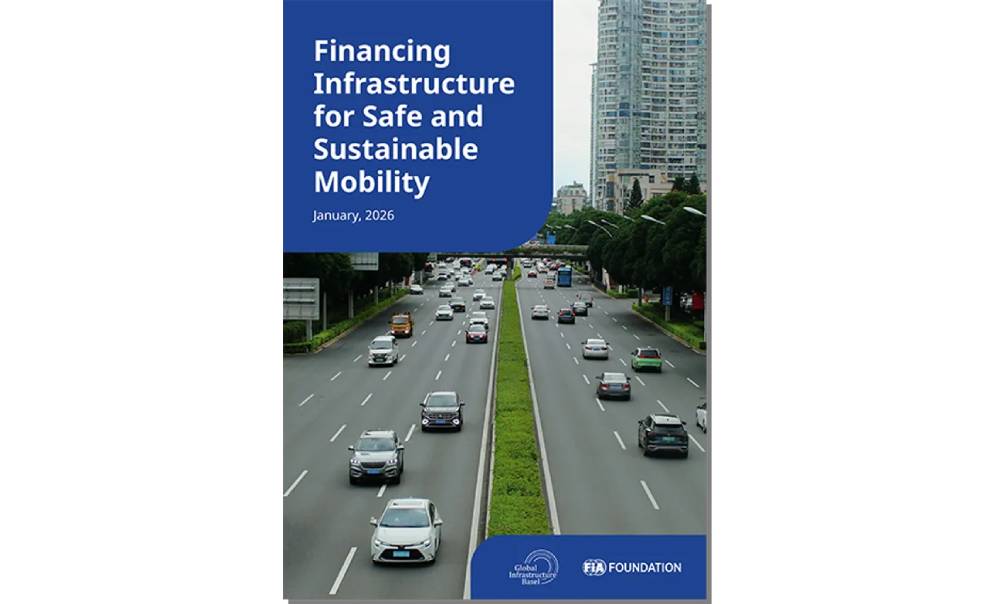
Financing Infrastructure for Safe and Sustainable Mobility (Jan 2026) – models, case studies, legal clauses and KPI/MRV guidance. (GIB Foundation & FIA Foundation)
Authors:
Thierry Déau, Founder & CEO, Meridiam
Louis Downing, CEO, GIB Foundation
Related News
17.02.2026
Meridiam announces the closing of its €2.2 billion Europe Core Fund and launches its first retail dedicated fund

29.01.2026
Meridiam, Partners Supporting Metro’s Sepulveda Transit Corridor Project’s Locally Preferred Alternative